
.png)
How to build a marketing campaign strategy that connects and converts your audience
Let’s start with some bad news: if your marketing campaign strategy is not actually strategic, it’s a project plan with fancier formatting. Most guides tell you to set a goal, build a persona, pick your channels, allocate budget, and measure the results. These things are true, but if you’re sending a campaign out into the wild before being clear on who it’s for (and if you built it with them or at them) it’s not going to land.
The good news is that we’ve written a complete guide on how to build a marketing campaign strategy. What it is, how to build one, and some brand examples that got it right.
What is a marketing campaign strategy?
A marketing campaign strategy defines the why and the what. It sets your core message, your audience, and your directional campaign goals. It is different from a project plan, which defines the how and the when. It's the exact tasks, the owners, the delivery dates, and the campaign timeline.
A project plan is still important, but it’s an admin task. We’re seeing brands propose a to-do list without any strategy in sight and are confused when this doesn’t work. A marketing campaign strategy template needs a clear point of view to mean anything, and marketing channels and creative assets should only be considered after the strategy is set.
The strategy is a decision about what you believe, who you're talking to, and what you're willing to say that your competitors won't.
Why most marketing campaign strategies fall flat
The standard process in many guides treats the audience as something to broadcast at without ever involving them or considering their opinions or lives. Co-creation is the difference between a campaign that stops people and one they scroll past.
When you build a campaign with the community it's for, drawing on their real experiences, their language, their in-jokes, it connects because it was made by the people it's speaking to. If it’s vaguely fired at them with no real understanding, at best it’s tepid, but at worst it can offend or alienate the community you’re trying to reach. Performance marketing alone without a solid brand does nothing in the long wrong (we’ve written more about that here).
How to create a marketing campaign strategy
Here's how to create a marketing campaign strategy without losing the plot along the way. Follow it in order, and never forget the important questions: who is this for, and are we building it with them?
Start with campaign objectives
Before anyone opens Canva, establish what you're trying to achieve. Real campaign objectives go beyond “post more”.
Think about SMART goals: specific, measurable, achievable, relevant, and time-bound. Goals like “raise awareness” are difficult to track, but "increase newsletter sign-ups by 20% in Q1" is easy to tell whether you hit it. You need to set a clear direction, then the tactics come later.
Understand your audience
Defining your target audience goes beyond a buyer persona questionnaire. You need to know more than demographics to truly understand your audience. How do they think, what do they want, what is bothering them, and how can your product benefit them?
To find this out you need to do market research, customer interviews, social listening, read the comments, paying attention to how people talk when a brand isn't in the room. Understand their desires and their pain points, and how what you're selling fits into their lives. Audience insight establishes strategy.
It’s also worth applying market segmentation as not everyone in your marketing funnel is at the same point in their buyer's journey, and a one-size message serves no one. Map the customer journey from first hearing about you to becoming a regular, and you'll know what to say and when.
Land on one core message
In 2026, many campaigns have no backbone. If your brand message is unclear, your audience will clock it and call you out for it.
If you're running a bigger, integrated marketing campaign across multiple touchpoints, build a simple messaging hierarchy: the clear main idea at the top with supporting messages underneath. Consistency builds your brand identity and drives brand awareness.
Choose the right channels
Only after the strategy is sorted do you look at where the campaign lives. You do not need to be everywhere; being on every platform at once will wear out your ideas and your social media manager. Pick the marketing channels where your community is and the ones you know you can do well.
Choose from owned media (your site, socials, newsletter, and blog), paid media (ads you pay to run), and earned media (PR, coverage, the stuff you can't buy). A strong digital marketing campaign strategy often combines all three.
Your options include:
- Email marketing
Still one of the highest-return channels, because you own the list. A smart email marketing campaign strategy gives people something worth opening and never spams with noise. - Social media marketing
Your social media marketing campaign strategy should match the platform to the audience. Instagram and TikTok for reaching younger, culture-led communities, LinkedIn for a B2B marketing campaign strategy. Short-form video still performs best, so make sure you include video marketing. - Paid search / pay-per-click (PPC)
Great for catching people already looking for what you do. - SEO
Search engine optimisation gets you ranking long term. It works months after you publish it and feeds your content marketing engine. - Display ads, direct mail, influencer marketing, and affiliate marketing
All worth a look depending on who you're trying to reach and where they pay attention.
Plan the build, then set it live
Map your campaign timeline, assign owners, and sort your creative assets in advance so you're not scrambling on launch day. Sort your call to action (CTA) and your landing page; some marketing automation can take the manual grind out of the sending and scheduling, freeing your team up for the important stuff.
The different types of campaigns you could run
Not every campaign wants the same thing, and you need to shift the strategy depending on the goal.
A brand awareness campaign is about getting known and remembered over immediate sales. An acquisition campaign pushes people to take a specific action, like a first purchase or handing over their email. An engagement campaign deepens the relationship with people who already know you. And a product launch is a build-up around a single defining moment. And don’t forget about customer retention. It's cheaper to keep a customer than to win a new one, and loyalty is now more important than ever for authenticity.
Should you use AI-generated campaign content?
Our answer is no. AI can spin out content in minutes, and it’s cheaper to type out a prompt than pay someone who’s actually skilled in their creative craft (some shade), but if cost and time are your only two arguments, you need to be looking at the bigger picture.
AI-generated campaign content is dull; it all looks the same, and no matter how advanced you think it is, it’s still recognisable as machine-made. And people still don’t trust machines. Only 7% of consumers say visible AI-generated content makes them trust a brand more, while 31% say it makes them trust the brand less. A recent survey found that 93% of consumers say authentic brand engagement builds trust and more than half would stop buying from a brand after an inauthentic experience.
If you lose your customer’s trust you're going to be spending much more time and budget trying to win it back. Use AI as a tool, but don’t use it to generate public-facing content.
Marketing campaign strategy examples worth learning from
A good marketing campaign strategy example shows the reasoning behind it. Here are some of our favourites.
Patagonia
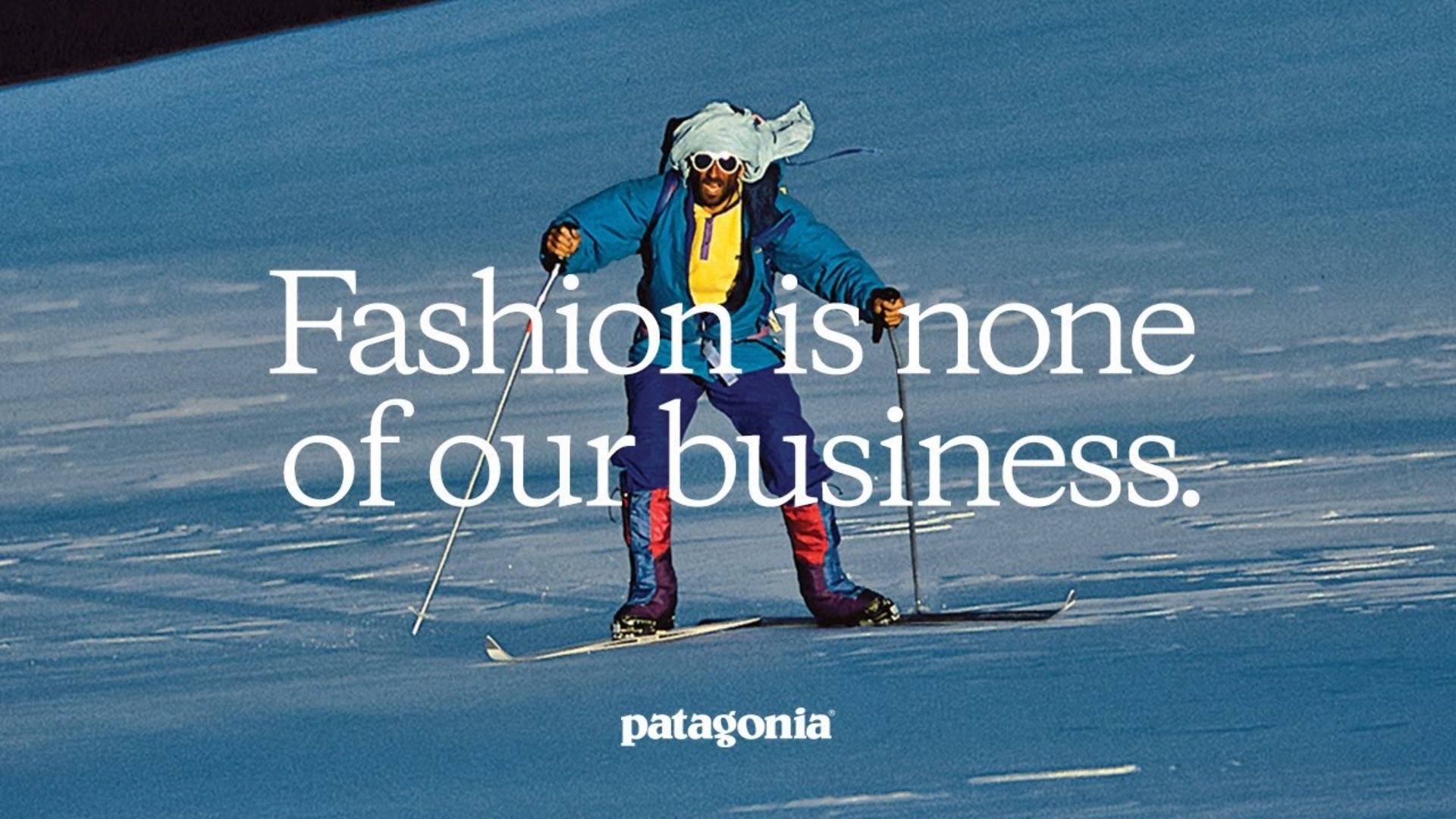
Patagonia's “Unfashionable” campaign stays true to the brand’s values of quality, integrity, and environmentalism. The brand is very aware of the impact of the apparel industry on the planet and makes products of the highest quality, built to last; the opposite of the fast fashion epidemic.
The company lives its values in everything they do. Their “Earth Is Now Our Only Shareholder” restructuring commits to using every dollar from Patagonia to protect nature and local communities and fight the environmental crisis. Their dedication to the planet is unwavering, regardless of any commercial pressure.
Dove
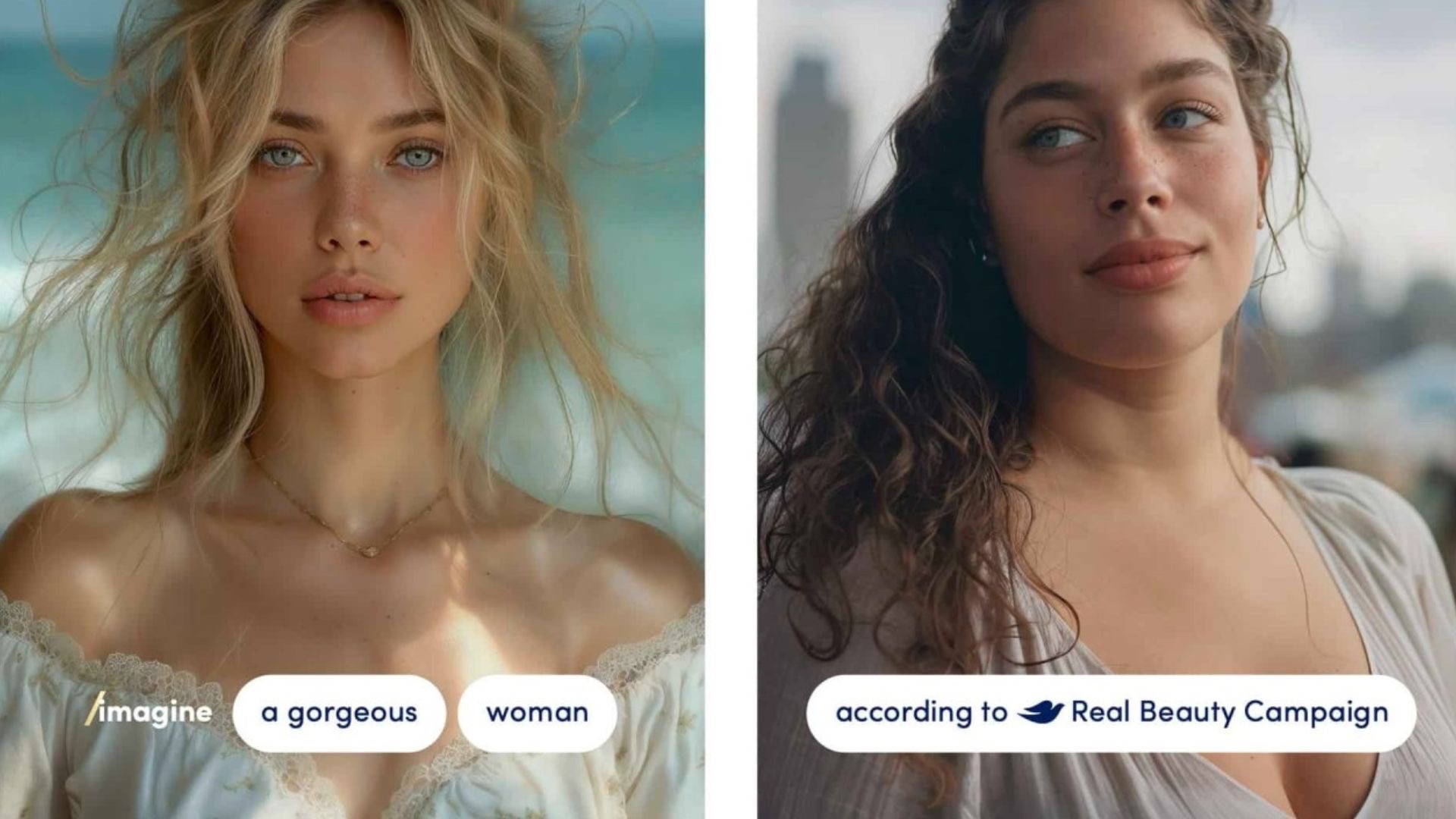
Dove’s “The Code” looked at the impact of AI on beauty standards, calling out AI-generated images that don’t reflect human beauty. Their vow to #KeepBeautyReal aligns with their universal presence in the industry and their commitment to representing and celebrating real diverse beauty.
Apple
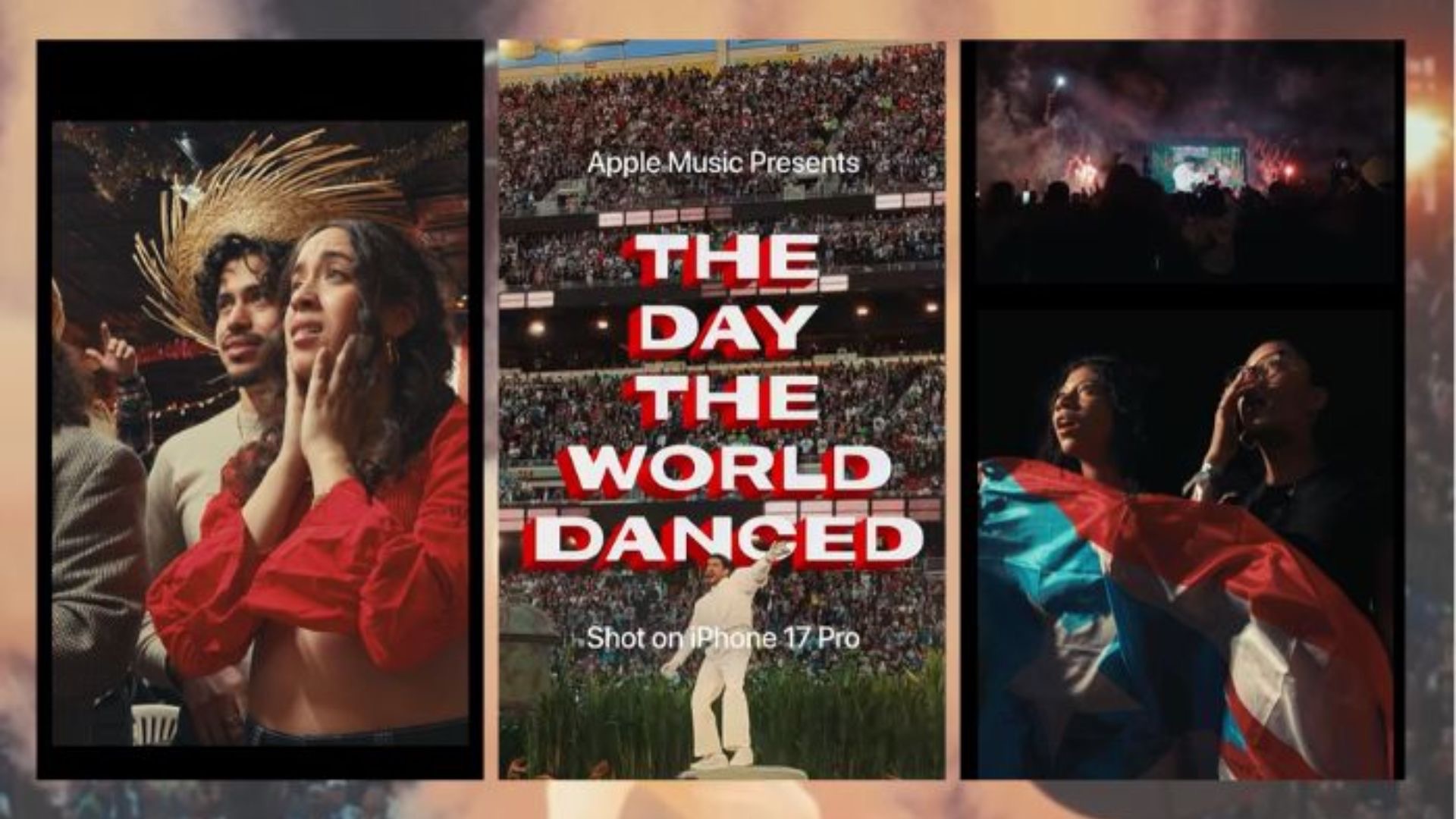
Apple takes co-creation seriously in their “Shot on iPhone” campaign that’s been running for over 10 years, using customers’ iPhone snaps to show that you don’t need studio equipment to take good photos. This year they launched “The Day The World Danced”; worldwide footage of Bad Bunny’s Super Bowl halftime show. Apple used 23 photographers across 15 locations to spotlight the iconic moment from different perspectives, highlighting the diverse representation in the show, while authentically promoting their product.
HER
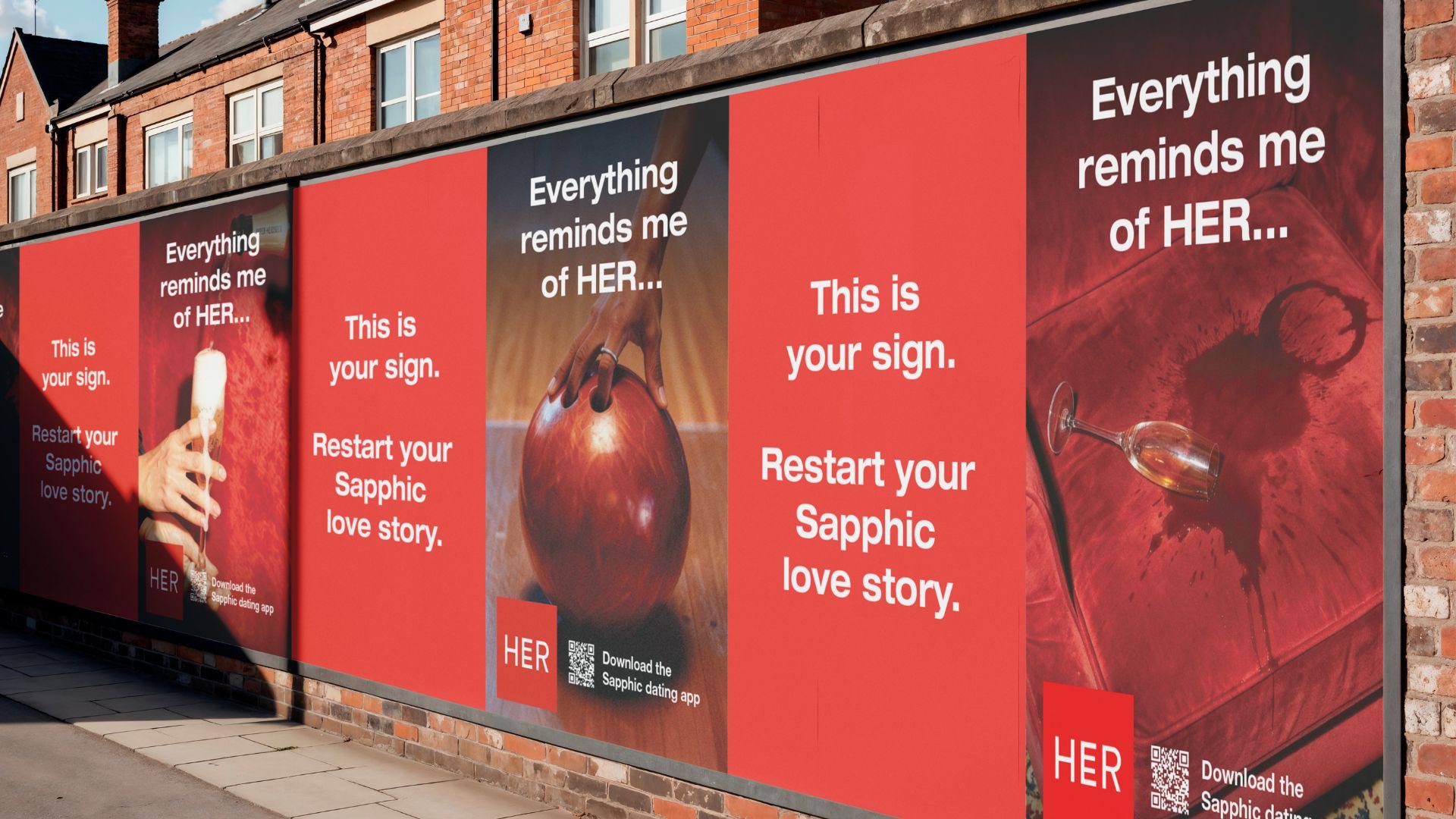
We can’t talk about advertising campaign strategies without mentioning our own “Everything Reminds Me of Her” campaign for HER, the sapphic dating app. Using imagery that speaks specifically to sapphics, we created a wildposting campaign using an if-you-know-you-know inside joke that directly targeted their audience. Co-creation shaped our strategy; we built the entire thing with queer creatives, drawing on queer culture and ideas from our all-queer team and the HER team’s experiences.
These are some of our standout campaigns where the strategy behind the concept is clear. If you’re looking for more campaign inspo, we look at the best marketing campaigns of 2026 so far, and some out of home marketing examples in two of our recent articles.
Marketing for women and underrepresented communities
If your campaign is aimed at women, at the LGBTQIA+ community, or otherwise underrepresented communities, you need to do more than the generic guides tell you. People are not demographic checkboxes, and if you’re marketing at a community without including them or even understanding them, your “strategy” is performative and your campaigns will fall flat.
Instead of targeting your audience, think how you can culturally include it. Yes, we’re talking about co-creation again, but it is the most important thing about building a marketing campaign strategy, and will be the difference between your campaigns landing and a potential PR disaster.
How to measure what works
Campaign measurement is crucial to any strategy. Decide your key performance indicators (KPIs) before you launch and make sure they mean something. Look at conversion rate, click-through rate (CTR), cost per acquisition or customer acquisition cost (CAC), and return on investment (ROI).
Set up your analytics properly, whether that's Google Analytics or your platform's own tools, and keep track of the numbers. Run A/B testing where possible for campaign optimisation and make changes as you go. Brands that do well listen to feedback, learn from what is and isn’t working, and adjust the strategy accordingly.
And don’t spend too much time on vanity metrics. Impressions and follows can look great but do nothing for the growth of your business. Spend your time on what matters.
Do you need a template?
A marketing campaign strategy template is useful, but it isn't a strategy. A template contains your lead generation, channels, first-party data, and customer notes in one place, and it's handy when you're running a big integrated marketing campaign or an omnichannel effort with lots of moving parts and a multichannel rollout.
A shared template keeps all your in-house team on track, or it’s a helpful resource to share with an onboarded freelancer or a marketing agency, but it doesn’t give you a point of view. Fill the template in after you’ve got solid ideation, and if you’re weighing up the pros and cons between in-house vs agency, we’ve written about that here.
Build a campaign people care about
A marketing campaign strategy is about who you are, what you stand for, and how you want your audience to perceive you. It’s not a to-do list process and shouldn’t be treated that way. Your audience wants to see your unique point of view, and if you get that part right, the rest will follow.
Struggling to find it? This is exactly what we can help you with at I Am Female*. If you have the idea but not sure of the strategy, we should talk. Book a call with us to get your marketing campaigns heading in the right direction.


Go on… steal all of our brilliant ideas


Go on… steal all of our brilliant ideas
Fancy some emails you’ll actually want to read? Sign up for our newsletter and we’ll slide into your inbox with insights on how you can make your brand hotter than Dante's inferno.